
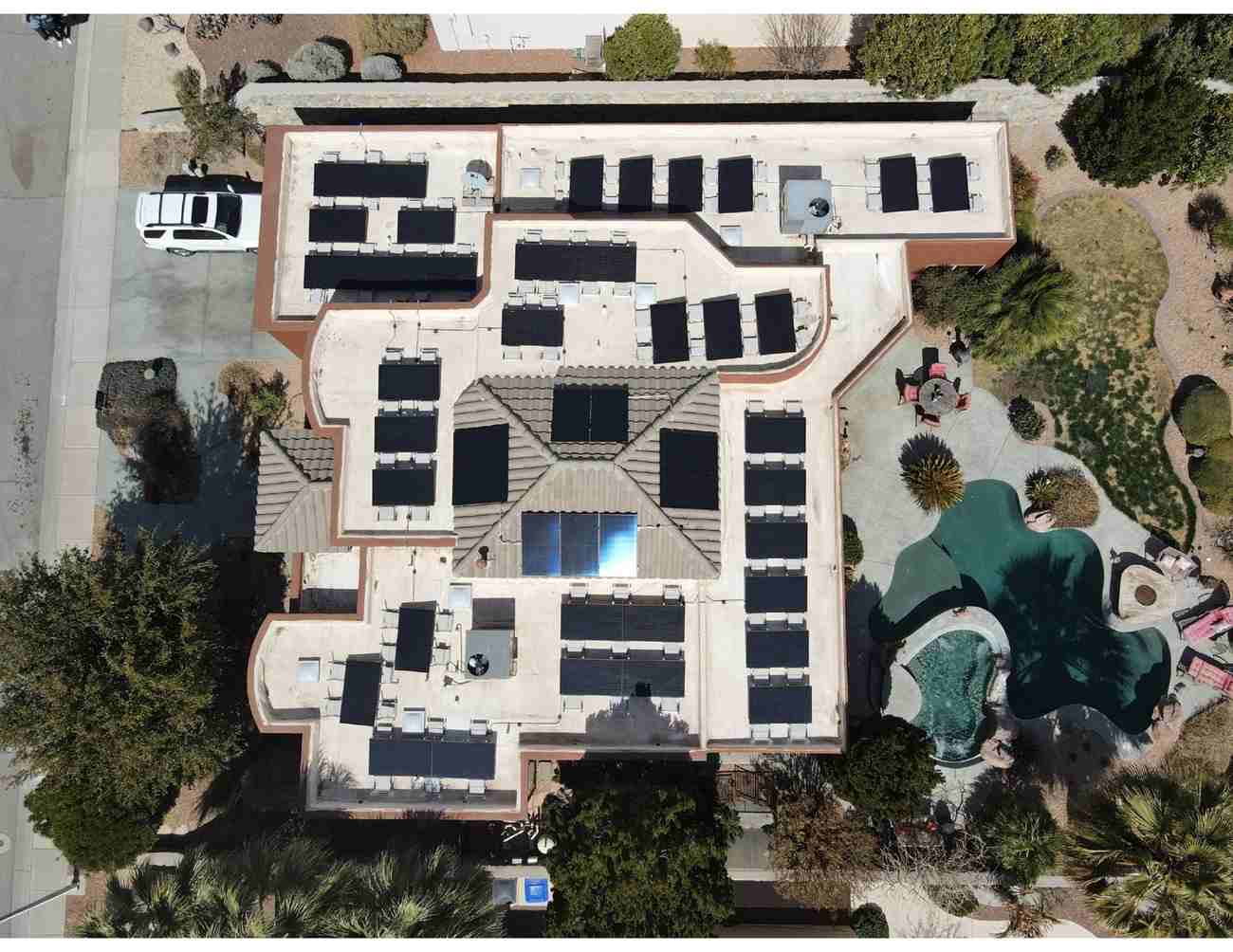
Net metering in New Mexico is one of the biggest reasons home solar pays off here — and one of the most misunderstood. In plain terms, net metering is the billing arrangement that credits you for the extra electricity your solar panels send back to the grid. Here is how it works in New Mexico, why it matters, and how to get the most from it.
What Net Metering Actually Is
Your solar panels make the most power in the middle of the day — often more than your home is using right then. Instead of wasting that surplus, your meter sends it to the grid and your utility credits your account for it. Later, when your panels aren’t producing — at night or on cloudy days — you draw power back from the grid and those credits offset the cost. The grid effectively acts like a giant battery you bank energy in.
Why Net Metering Saves You Money
Without net metering, you would only save on the power you use the instant it’s produced. With it, every kilowatt-hour your system makes has value — whether you use it immediately or send it to the grid for credit. That’s what lets a well-designed system offset the large majority of your bill, turning an expense that only rises into a predictable, much smaller one.
How Net Metering Works in New Mexico
Here is the good news if you are going solar in New Mexico: the state has some of the most favorable net-metering rules around. New Mexico utilities credit the surplus energy your panels send to the grid at the full retail rate — the same rate you pay for power — and those credits roll over month to month. So the extra energy your system banks during long, sunny summer days helps cover your shorter, lower-production winter days. For most New Mexico homes, that is the difference between a small utility bill and almost none.
It is worth knowing that net metering is not a single national policy — it varies by state and even by utility. Some areas credit exported solar at a lower “avoided-cost” rate instead of full retail, which makes system sizing and battery storage more important there. But in New Mexico, the retail-rate, roll-over structure is about as good as it gets, and a good local installer will design your system to take full advantage of it.
How to Get the Most From Net Metering
Two things help you capture the full value of net metering. First, size your system correctly — matched to your actual annual usage, not oversized. Second, in areas where exported power earns less than retail, consider pairing solar with a home battery so you use more of your own energy instead of selling it back cheaply. Your installer should model both for your home.
What Happens to Your Credits Over Time?
A common net metering question is what happens to credits you don’t use. In most month-to-month rollover programs, surplus credits carry forward and quietly offset future bills — so the extra power your panels make on long summer days isn’t lost; it’s waiting for you in the darker winter months. Some utilities also do an annual “true-up,” where any leftover credits at the end of the year are either rolled forward or cashed out at a set rate, depending on local rules. The practical takeaway is simple: with good net metering and a properly sized system, very little of your solar production goes to waste. That’s a big part of why solar delivers predictable, long-term savings instead of the ever-rising bills you get from buying all your power from the utility. Your installer can show you exactly how your utility handles credits before you commit.
Going Solar in New Mexico?
The best way to know exactly how net metering will work for your home is to talk to a local team that knows New Mexico’s utility rules. Sunforce Solar designs solar systems across New Mexico with the state’s favorable net-metering policy in mind. Learn more about going solar in New Mexico, or contact us for a free, no-obligation quote.